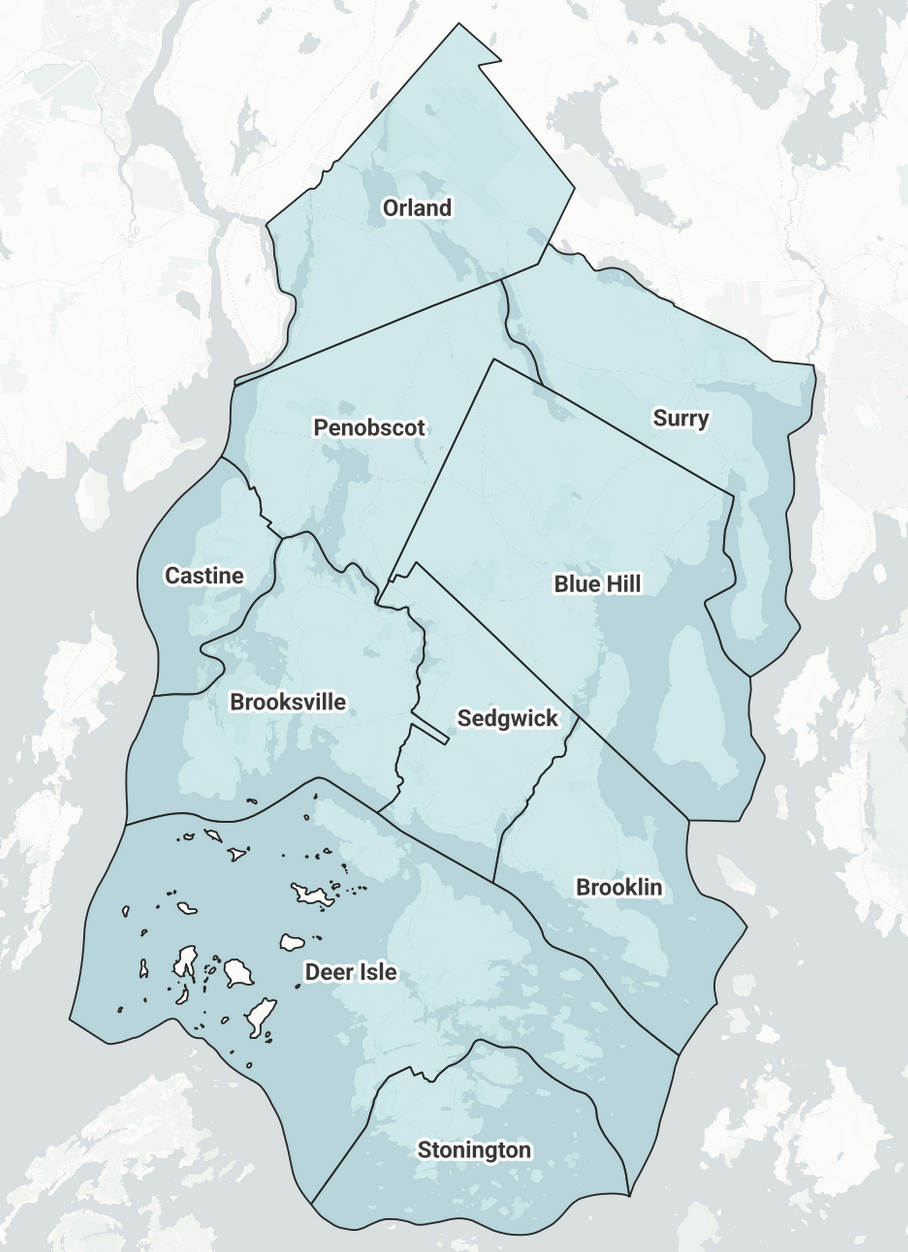
On the Blue Hill Peninsula in Downeast Maine, unaffordability, high demand, and construction challenges have contributed to a housing market that is not financially accessible for most households. CommunityScale is leading a 10-town project to identify strategies to increase and diversify local housing supply, including homes for seniors, families, and the workforce. HOOP is a collaboration between Blue Hill, Brooklin, Brooksville, Castine, Deer Isle, Orland, Penobscot, Sedgwick, Stonington and Surry. The project is funded by a Municipal Housing Grant through the Maine Office of Community Affairs. HOOP is led by community members from each town, alongside the Hancock County Regional Planning Commission. We’re supported by Levine Planning Strategies, who will help develop an implementation plan, and Neighbor Architects, who will build a housing toolkit.
This 10-town initiative is the largest municipal-level collaboration for housing development to take place in Maine.
Housing toolkit
The goal of HOOP is to identify realistic, actionable pathways to create new housing on the Peninsula. There is an acute need for homes, especially rental units, and home prices are not affordable to typical households. Very little new housing is built – about 20 units across the entire region per year – and the seasonal housing and short-term rental markets take existing units out of circulation for year-round residents.
There is no easy answer for how to create more housing. While most towns do not have local zoning or building permits to constrain development, there is little sewer and water infrastructure, limiting density. There are also extensive areas with environmental constraints. Land and construction costs are high, and trades labor is in high demand. All 10 towns have small populations with limited municipal staff and capacity.
Still, a multitude of nonprofits and municipal groups are already working to strategize and build new homes across the Peninsula, from local task forces to small-scale adaptive reuse projects powered by local fundraising. HOOP aims to bring together these efforts and turn housing needs into action through traditional funding pathways as well as innovative new strategies and partnerships.
Case studies
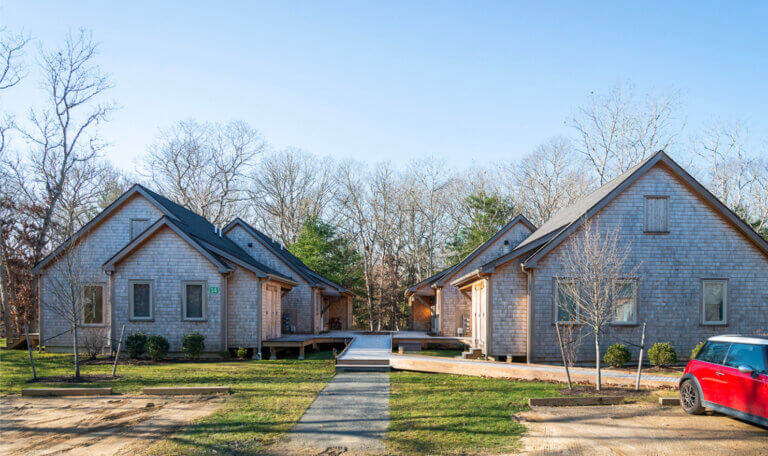
Strategies will form just one part of the project’s housing toolkit. Neighbor Architects, authors of the Boston ADU Guide, will design two housing case studies to help streamline new development in rural and village infill scenarios. These case studies will be rooted in local conditions, addressing water, wastewater, and infrastructure concerns, with both traditional and modular or manufactured building types. These designs can be used and customized by builders and developers, making it easier for them to understand local conditions and different types of housing that can be built.
Local trends
Until the COVID-19 pandemic, the population on the Peninsula was generally stable, with a slight decline over time. The population began to grow in 2020, followed by a sharp increase in home prices. The share of high income earners and people 65+ on the Peninsula is growing, as is the share of single-person households and seniors living alone. The share of families with children has remained stable, and local schools have seen a continued moderate decline in enrollment.
Housing and jobs are interconnected. While the number of households on the Peninsula has grown, the number of local jobs has slightly decreased. Peninsula employers report difficulty hiring because of a lack of workers and difficulty for workers to find affordable local homes. The local economy is rooted in the working waterfront, with major employers including the Maine Maritime Academy, Brooklin Boat Yard, and the lobster industry. But while local jobs lean blue collar, Peninsula residents have a higher share of workers in knowledge and other job sectors.
From 2019-2024, Peninsula towns have also seen a large increase in people working remotely, with some towns estimated to have a more than 300% increase in remote workers. These trends indicate that the growth on the Peninsula may be driven by retirees and people with off-Peninsula remote jobs, who have more financial capacity than locals.