
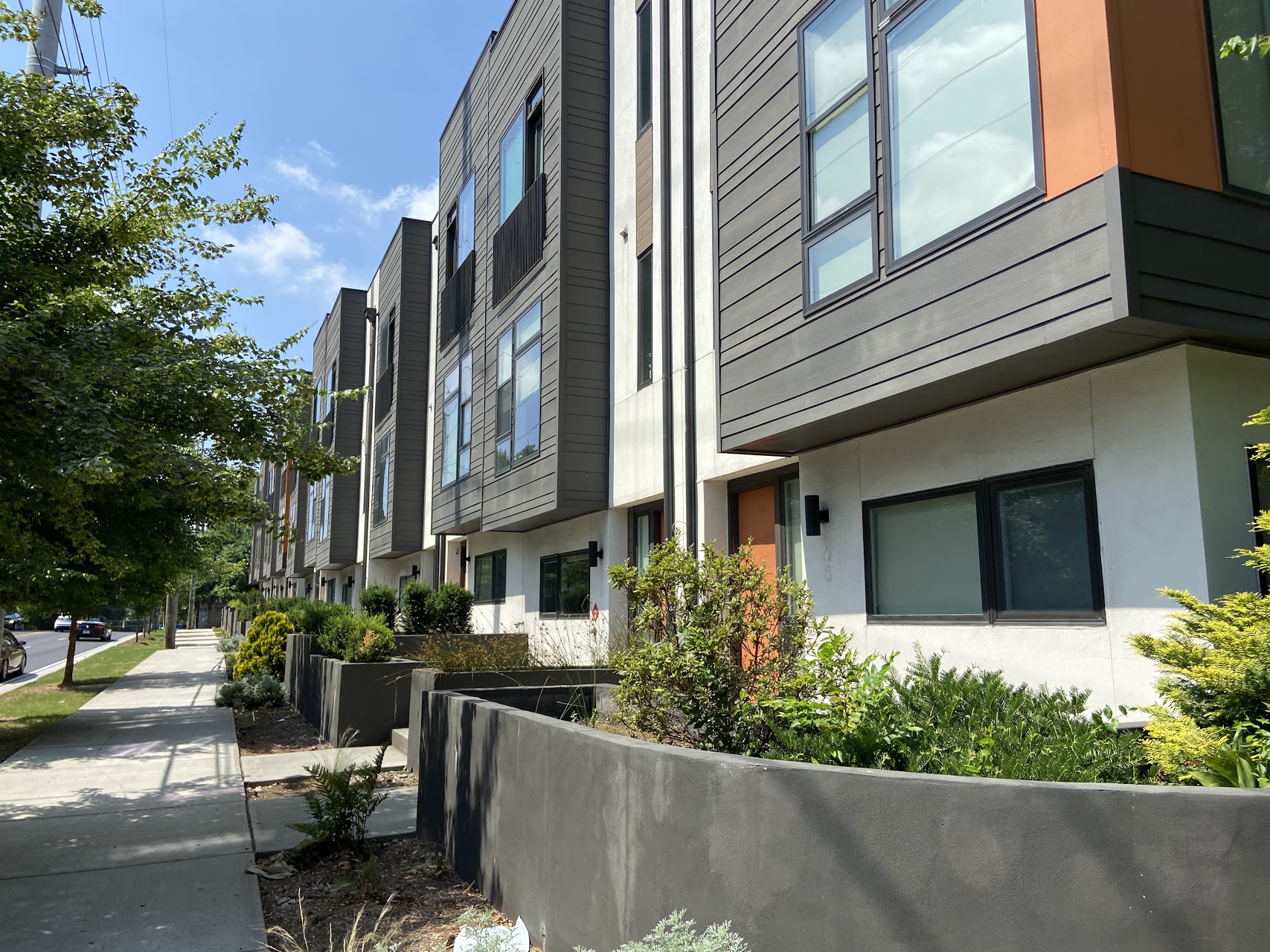
Proforma analysis
CommunityScale conducts integrated housing feasibility analyses to assess how market, demographic, and regulatory factors shape development potential. This work begins with a detailed evaluation of the existing housing stock and recent development patterns, supported by public data and private market sources such as Zillow and CoStar. Demographic and income trends are analyzed in relation to household projections to estimate future housing demand by affordability level. Representative housing types are profiled across a range of physical and economic attributes to reflect real-world conditions. Pro forma models are then used to test development feasibility under current market conditions, highlighting financing gaps and estimating the level of subsidy or incentive required for attainable housing production.
Test fits translate pro forma findings into site-specific development concepts, illustrating how proposed building types, densities, and affordability levels would work on actual parcels. This helps communities understand the practical relationship between housing supply goals and development economics, including what it takes for the private market to deliver housing at different income levels.
Economic feasibility assessment
CommunityScale’s Economic Feasibility Assessments provide municipalities with a clear understanding of how market conditions and regulatory requirements affect the financial viability of new housing development. These studies combine up-to-date demographic and housing market data, including rents, sales prices, interest rates, and construction costs, with detailed pro forma modeling to evaluate a range of development scenarios. Analyses account for factors such as land costs, project scale, affordability levels, and inclusionary housing requirements. A residual land value approach is used to identify feasibility thresholds and funding gaps across different housing types. Findings support evidence-based decisions about zoning, incentives, and regulatory changes. Results are delivered in a report with visualizations, policy recommendations, and technical documentation to support transparency and stakeholder engagement.
Economic feasibility work is central to answering the question communities face when adopting new zoning: will the private market actually build what the zoning allows? By modeling real-world development economics, CommunityScale helps municipalities set affordability requirements and density standards that are achievable, not just aspirational. These assessments connect directly to the three phases of local housing action, providing the financial evidence base communities need to move from planning to implementation.
Projects featuring economic feasibility analysis:
- Malden, MA: EFA for inclusionary zoning and MBTA Communities compliance
- Minneapolis-St Paul regional housing nexus study
- Fall River, MA: Davol Street corridor housing market and feasibility analysis
- West Natick, MA: mixed-use zoning with development feasibility
- Malden, MA: MBTA Communities development feasibility
- Downtown Syracuse, NY: housing needs and market study
Related reading: