
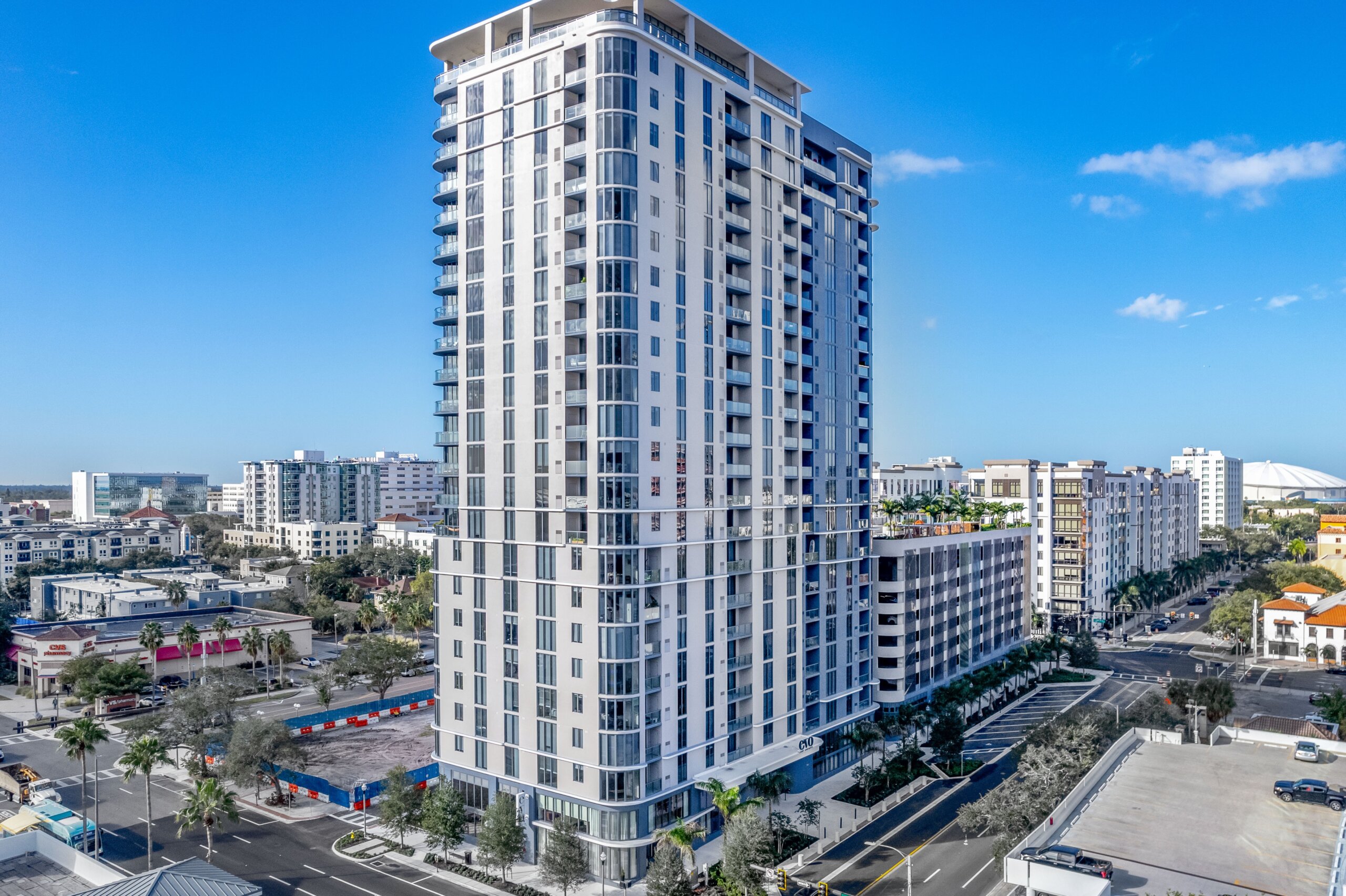
We hear a version of the same question in nearly every community we work with: if new housing is so expensive, how can building more of it help people who can’t afford it? It’s a fair question. A new apartment renting for $4,000 a month doesn’t look like an affordability solution. But research shows that the benefits of new construction reach far beyond the people who move in first. The mechanism is simple, well documented, and surprisingly powerful. We wrote about the broader case in Why we focus on housing supply.
The migration chain effect
When someone moves into a new apartment, they leave their previous home behind. A second household moves into that vacancy, leaving behind their home, and so on. Economist Evan Mast tracked these “migration chains” across 12 major U.S. cities, following 52,000 residents of new market-rate buildings through six rounds of moves. The findings are striking: by the sixth link in the chain, roughly 40% of movers were coming from neighborhoods with below-median incomes.
Mast’s simulation shows that 100 new market-rate units create between 45 and 70 equivalent units in below-median income neighborhoods. Even under conservative assumptions, the ripple effect extends deep into lower-income parts of the metro area. As CityLab reported, even pricey new units free up a significant amount of existing housing, and the process doesn’t take decades to unfold. Meaningful effects emerge in two to five years.
Real-world results
Minneapolis has been building more housing than comparable Midwestern cities for years, and the results are clear. Adjusted for local earnings, average rents in Minneapolis are down more than 20% since 2017, while rents in five other similarly sized and growing cities have risen over the same period. As one Minneapolis Star Tribune column put it, the chain reaction from new construction reaches into lower-rent districts every time a unit is added at the top of the market.
International evidence tells the same story. After Auckland, New Zealand upzoned large areas in 2016, its 25% rent premium over Wellington was erased within six years. The pattern is consistent: when cities allow more housing to be built, affordability improves across the market.
What this means for communities
In our housing shortage analysis, we’ve documented how supply deficits ripple through local markets, pushing costs higher at every income level. The filtering research confirms what we see in the data: housing markets are deeply interconnected. Restricting supply in one segment affects every other segment.
This is how new construction improves affordability. The chain reaction creates openings throughout the market. And importantly, the effect is strongest in tight markets with low vacancy rates, precisely where shortages are most acute and the need is greatest.
We’ve explored this interconnection from several angles, including the relationship between housing costs and household income, the fiscal case for housing growth, and the role of policy choices in shaping local housing outcomes. In each case, the conclusion points in the same direction: more supply leads to better outcomes for residents at every income level.
Supply is necessary, not sufficient
Filtering does not reach the very lowest-income households who cannot afford any market rent. Direct subsidies and dedicated affordable housing remain essential for those populations. As Timothy Taylor noted in his review of the research, market-rate construction and direct housing assistance are complementary strategies, not competing ones. But restricting supply makes every affordability challenge worse.
The bottom line
New housing benefits more than the people who can afford to live in it. Every new unit sets off a chain of moves that opens doors in neighborhoods throughout the region at a variety of income levels.
