
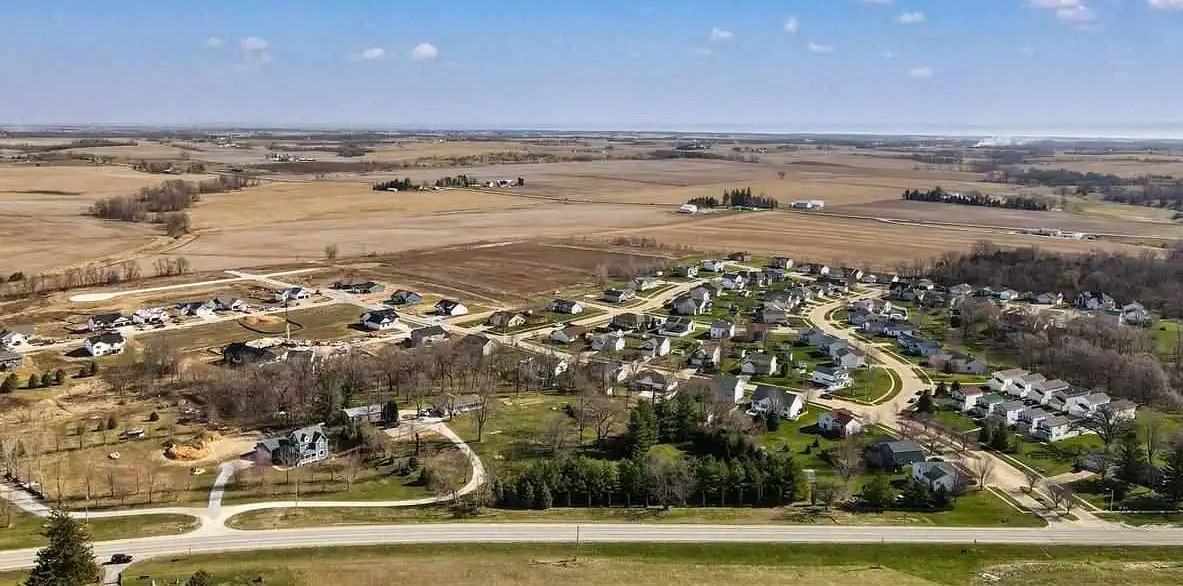
CommunityScale partnered with Johnson County, Iowa to complete a comprehensive housing assessment study for the county’s non-metro area, encompassing six small cities and unincorporated areas. The study identified a need for approximately 950 new housing units over the next decade and provided actionable strategies to address housing diversity, affordability, and demographic shifts. View key indicators from the study on the project dashboard.

Understanding the Challenge
Johnson County, located in east-central Iowa, is home to more than 156,000 residents across 11 cities. While the county’s metro area (Iowa City, Coralville, North Liberty, Tiffin, and University Heights) has experienced robust growth, the non-metro area, comprising six small cities (Hills, Lone Tree, Oxford, Shueyville, Solon, and Swisher) and unincorporated areas, has grown at a slower pace. The county’s comprehensive plan prioritizes equitable access to safe and affordable housing, but local officials lacked detailed data to inform housing, land use, and transportation policy decisions for these non-metro communities.
The study focused on understanding current housing conditions, projecting future needs, and identifying barriers to housing production and access. Key challenges included an aging population, declining families with children, limited housing diversity, and constrained land availability due to septic standards and lack of water and sewer infrastructure in many areas.
A Community-Driven Process
CommunityScale’s approach combined rigorous quantitative analysis with extensive community engagement. The project team spent more than 35 hours facilitating in-person focus groups, stakeholder meetings, and public workshops throughout the county. More than 120 residents, stakeholders, local government staff, and elected officials participated in these sessions, while 90 additional residents completed online surveys.
The engagement process included dedicated focus groups with manufactured home park residents, economic development organizations, nonprofits, and small city leadership. Public workshops in Hills, Solon, Lone Tree, and Swisher provided opportunities for residents to weigh in on housing priorities and preferred locations for new development. Survey participants identified affordability, manufactured home park conditions, housing diversity, and rural character preservation as top concerns.
Data analysis drew from Census data, local assessor records, building permit data, and market sources to paint a comprehensive picture of demographic trends, housing stock characteristics, and market dynamics across the non-metro area.
Key Findings
Johnson County’s non-metro area has been growing at a steady pace, adding households at approximately 0.75% annually. If this trend continues, the area can expect to add more than 700 net new households over the next decade. Combined with factors related to maintaining a healthy housing stock and relieving market pressures, the study identified a production target of 950 new units needed over 10 years.
The population is aging rapidly. Current trends suggest the 65+ cohort will be the fastest growing demographic by far, with most other age groups projected to lose population over the next decade. This shift creates urgent needs for senior housing options and strategies to attract young people and families to sustain long-term community viability.
Housing diversity does not reflect current and emerging market preferences. The non-metro area has a large supply of owner-occupied single-family homes but lacks options for renters, downsizers, and households seeking smaller units. Of 11,853 housing structures in the non-metro area, 82% are owner-occupied and only 19% have two or fewer bedrooms. As the 65+ population grows, many will seek opportunities to downsize without leaving their communities, moving from larger houses into smaller ownership options such as condos and townhomes.
Income polarization is increasing. The area is adding households at higher and lower income levels faster than middle-income levels, creating pressure on both naturally affordable housing stock and demand for subsidized units. Housing in the non-metro area is relatively affordable to middle and upper incomes, but lower-income households face increasing barriers to both homeownership and rental housing.
Manufactured home parks serve as an important housing option for certain groups in Johnson County, providing lower-cost alternatives particularly for single-parent families and older residents. However, residents in several parks have reported rapidly rising lot fees, aggressive management tactics, and deteriorating conditions, creating housing insecurity for vulnerable populations.
Strategic Recommendations
The study provided 14 policy recommendation areas organized around key findings. Recommendations focused on three major categories: direct County actions, partnerships and collaboration, and support for small cities.
Aging in place: Promote production of more senior housing options in cities that currently lack assisted living facilities. Explore home retrofit programs that improve accessibility for seniors, connecting residents with existing programs and developing new initiatives where gaps exist.
Direct investment: Expand the County’s participation in the Housing Trust Fund of Johnson County. Consider larger direct investments such as purchasing land for public-private development that meets affordability goals, and explore public-private partnerships to support infrastructure investments needed to enable private housing development.
Downtown revitalization: Contribute County staff time, expertise, and resources to promote housing development as a mechanism to revitalize small city downtowns. Identify opportunities to create mixed-use development and upper-floor housing on main streets, connecting cities and property owners with technical assistance and available incentives.
Missing middle housing: Promote missing middle infill housing through awareness campaigns, technical assistance, and financial incentives. Develop case studies highlighting successful infill development, offer technical assistance to small cities for zoning code updates, and explore financial support for homeowners adding accessory dwelling units or small-scale developers building income-restricted units.
Manufactured home parks: Explore strategies to improve conditions at manufactured home parks through continued dialogue between residents, the Board of Supervisors, and park owners. Support lobbying efforts that represent residents’ concerns at the state level, and explore strategies to convert parks to community land trust models or support resident transitions to more stable housing options when necessary.
Small city partnerships: Leverage County funds and resources to expand small cities’ operational efficiency and ability to grow. Offer contracting services that would be more efficiently performed at scale, such as serving as the local water management affidavit provider, and provide grant writing services to help small cities access broader funding opportunities.
The study also identified extensive funding and resource opportunities available through state and federal programs, including the Iowa Economic Development and Finance Authority, Housing Trust Fund of Johnson County, USDA Rural Development, and various HUD programs administered through Iowa Finance Authority.
Creating Lasting Impact
The Housing Assessment Study has positioned Johnson County to make data-driven decisions about housing policy and investment in the non-metro area. The County has already begun exploring implementation strategies, including formation of a task force to translate recommendations into actionable plans, increased direct investment in affordable housing, and enhanced partnerships with the East Central Iowa Council of Governments.
The study’s digital deliverables, including an interactive online dashboard and map, provide ongoing tools for County staff, elected officials, and small city leaders to explore housing data and track progress toward goals. The County has engaged CommunityScale to provide semiannual data updates through January 2028, ensuring the study remains a living resource that adapts to changing conditions.
Learn more about the project on the interactive dashboard
Press coverage: The Gazette, Solon Economist
