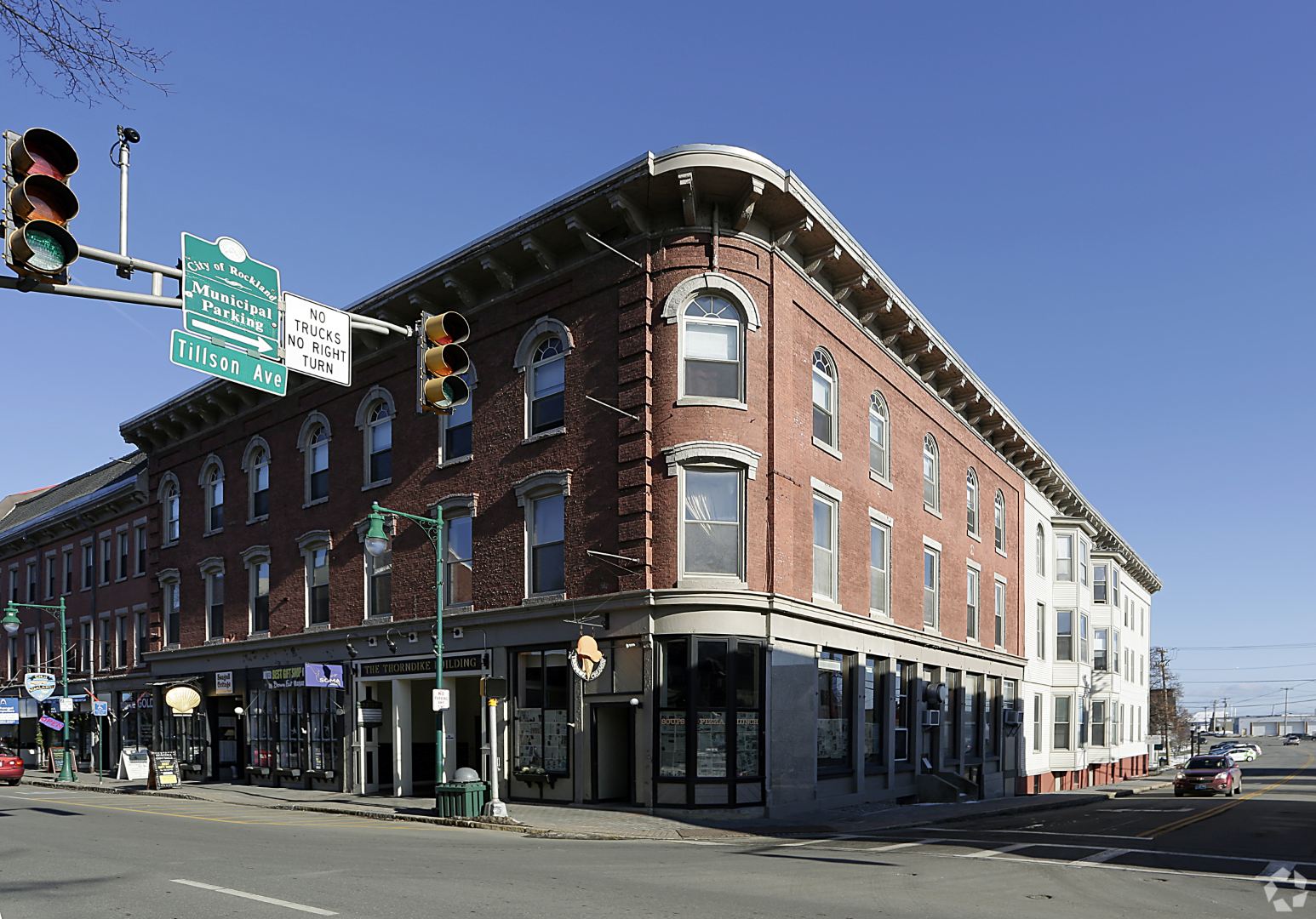
CommunityScale partnered with Levine Planning Strategies to help the City of Rockland, Maine produce its first dedicated Housing Plan, a ten-year framework to guide the city’s housing policy, funding, and development decisions.
Housing in Rockland has grown sharply more expensive in recent years, with median home prices roughly doubling since 2020, one of the steepest increases of any community in Maine. The plan gives city leaders a clear, actionable strategy for keeping Rockland an accessible and inclusive place to live.
The City of Rockland is notable in that it has already identified that it has a housing crisis, already adopted permissive zoning for housing, and, while we were engaged with the community, passed a $10M housing bond to support workforce housing. With this momentum, we worked with the City to set realistic targets and match the programs to their workforce housing needs.
A market pricing out local workers
People have discovered Rockland’s quality of life, its working harbor, its employers, and its well-run government, and home prices have followed. Rising values bring real benefits to current owners, but the costs fall hardest on renters and first-time buyers. A starter home within reach in 2019 is now out of reach for many, and local businesses increasingly struggle to find workers who can afford to live nearby. Some employees commute an hour or more, when the positions get filled at all.
Setting a production target
Drawing on state, regional, and local data, we estimated how much housing Rockland needs to build. A state study identified roughly 2,800 homes needed across Knox County between 2021 and 2030. Rockland makes up about 19 percent of the county’s households, which translates to roughly 540 new units over that period, or about 60 units a year for at least the next nine years. Recent production has run far below that mark, closer to 20 units a year. Closing that gap is the central charge of the plan, and it reflects our broader view on why housing supply matters.
Defining workforce housing for Rockland
Rather than rely solely on regional Area Median Income, which is based on countywide incomes and sits well above what many Rockland households actually earn, we worked with the City to propose a local definition. Affordable workforce housing is housing realistically attainable to households working common Rockland jobs, in retail, maintenance, personal care, firefighting, teaching, farming, fishing, and construction. We tied it to the city’s own median household income, up to 150 percent of local median for rentals and 200 percent for ownership, which worked out to about $91,600 and $122,200 in 2025. To make the numbers concrete, the plan profiles real households, from a restaurant worker living alone to a two-earner family with children, and shows what each can actually afford.
Recommended actions
The plan closes with twelve recommended actions, organized by how much public funding each requires and rated by expected benefit. Lower-cost steps include creating a local Affordable Housing Trust Fund, continuing the city’s land-use code reforms, inventorying city-owned land for housing, waiving wastewater connection fees for affordable developments, and expanding the use of affordable-housing tax increment financing.
More ambitious measures, most dependent on the housing bond, include seeding the trust fund, a first-time homebuyer program calibrated to Rockland’s real prices, bond financing for project infrastructure, and a rehabilitation program to keep existing affordable units in good repair. Each recommendation comes with a suggested implementation year so the city can move deliberately rather than all at once.

A roadmap for the decade ahead
Jeff Levine of Levine Planning Strategies presented the completed plan to the Rockland City Council on May 18, 2026, and local coverage marked its completion. We also built an interactive dashboard that tracks Rockland’s housing targets and bond investments, and the city has published both the full plan and the council presentation.
The Housing Plan recognizes that affordable housing is directly connected to the city’s workforce and economic future. Many working households in Rockland, including teachers, healthcare workers, retail employees, tradespeople, and public services workers, are struggling to find housing they can afford.
Tom Luttrell, Rockland City Manager
This plan gives Rockland a clear framework for how we can responsibly address one of the most important challenges facing our community. Housing accessibility and affordability impacts families, workers, employers, seniors, and the long-term health of our city. Rockland has already taken meaningful steps, and this plan helps chart a path forward for the next decade.
Adam Lachman, Rockland Mayor