Yesterday the Metropolitan Council, the regional planning agency for the Minneapolis-Saint Paul region, published a Regional Housing Nexus Study and an accompanying nexus and inclusionary housing calculator that CommunityScale built. The calculator lets any of the region’s cities and townships estimate how much affordable housing demand new market-rate development creates, and what inclusionary housing fee that demand can justify.
This post explains what a nexus study is, why inclusionary housing policy requires on one, and how we assembled the underlying model from open federal and state data.
Why inclusionary housing needs a nexus
An inclusionary housing ordinance (IHO, also know as inclusionary zoning) requires developers to set aside a share of new units at below-market rents. A typical ordinance might require that ten percent of the units in any development of ten or more units be affordable to households at or below 60% of area median income. With no public dollars are involved, the shortfall on the restricted units is funded by an internal cross-subsidy from the market-rate units in the same project, which means those market-rate units should generate enough revenue to carry the affordable ones.
Because inclusionary housing places a cost on private development, it has to rest on a demonstrated causal relationship, a “rational nexus,” between market-rate construction and the affordable housing demand it generates. The 2024 Supreme Court decision in Sheetz v. County of El Dorado extended a “rough proportionality” standard to legislatively imposed fees, and recent challenges, including one to inclusionary zoning in Cambridge, Massachusetts, have tested these programs on exactly this ground. A nexus study is how a community shows that its fee mitigates a real, measured impact rather than functioning as an arbitrary tax.
Thus, a nexus study establishes the legal ceiling by demonstrating the affordable housing demand that new development causes, and therefore the fee that demand can justify. This is often combined with a a financial feasibility analysis as a second test to establish how much of an impact a market rate projects can absorb before it stops penciling and never gets built.
How the nexus works
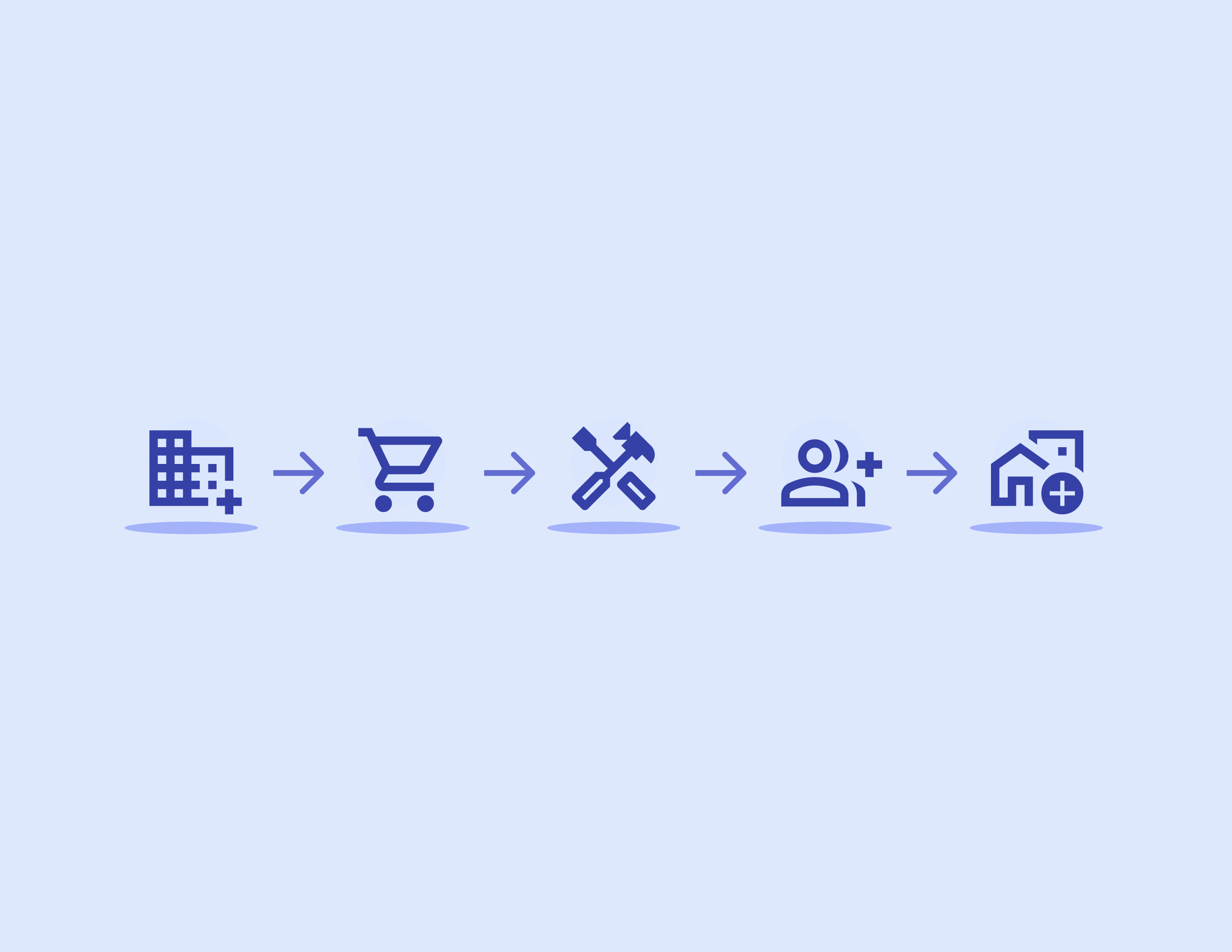
The standard nexus model traces a chain of economic linkages. New market-rate homes rent at prices that only higher-income households can afford. Those households spend a large share of their income on local goods and services. That spending supports jobs across a wide range of industries. Many of those jobs pay wages too low for the workers who hold them to afford market-rate rent in the same community. Those workers need housing they can afford. So each increment of market-rate housing induces a measurable amount of affordable housing demand.

Our calculator walks the chain one step at a time using publicly available data:
- Start with the market-rate rent for new construction in the community, then convert it to the household income a renter needs to afford it, using the standard rule that housing should not exceed 30% of gross income.
- Translate that income into a spending pattern: how a household at that income level splits its budget across food, retail, healthcare, transportation, entertainment, and other categories.
- Route each category of spending to the industries that receive it, from grocery stores and restaurants to retail and personal services.
- Convert that spending into wages, using the share of every industry revenue dollar that becomes worker payroll.
- Convert wages into workers and their household incomes, applying local wage levels by industry and the fact that lower-wage workers are far more likely to live in single-earner households (roughly 80% of workers earning under $39,000, compared with a small minority of higher earners).
- Sort those worker households by income and count only the ones who cannot afford the market-rate rent. The gap between what they can pay and the market rent, capitalized into a one-time subsidy, becomes the maximum justifiable fee per market-rate unit.
Because the whole chain begins with rent, the result is highly sensitive to local market conditions. Higher-rent communities imply higher-income new residents, more induced spending and employment, and a wider gap between market rents and what the induced workers can afford, so they generate larger justifiable fees.
See more detail in the webinar slides:
Built from open data
CommunityScale builds its analysis on open data and open-source tools wherever possible, and the nexus model is a clear example.
- Consumer spending by income: the Bureau of Labor Statistics Consumer Expenditure Survey, which reports how households at each income level allocate their budgets.
- Spending-to-wages conversion: the U.S. Census Bureau Economic Census, which gives the ratio of receipts to payroll for each industry.
- Local industry wages: the Minnesota Department of Employment and Economic Development’s Quarterly Census of Employment and Wages for the seven-county planning area, so wages reflect the regional labor market rather than national averages.
- Household structure: American Community Survey tables on employment status and household size, used to separate single-earner from multi-earner worker households.
- Affordability thresholds: HUD Income Limits and AMI, which define the income categories the demand is sorted into.
Who should use it
The calculator is built for local governments that want to understand the affordable housing demand that market-rate development generates, establish or update an inclusionary requirement, or set a fee-in-lieu structure. The Regional Housing Nexus Study, the full methodology, and the calculator itself are available through the Metropolitan Council.