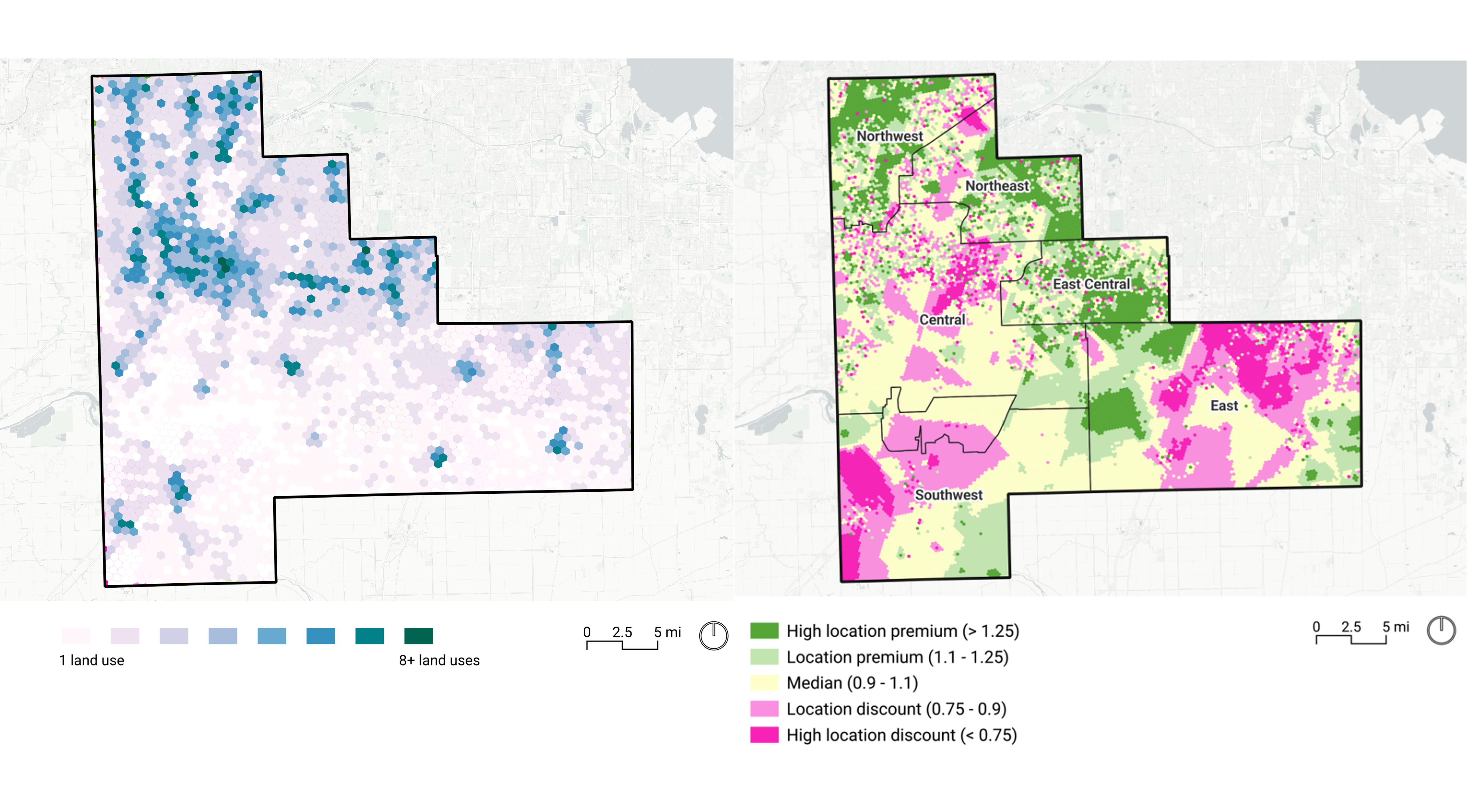
CommunityScale completed a Housing Market Assessment for the City of Sandusky, Ohio, as part of the City’s Housing Development Accelerator with OHM Advisors leading the team. The assessment set out to answer four practical questions: which housing types Sandusky is missing, what households in the regional market are actually able to pay, how construction cost compares with achievable rents and sale prices, and which vacant sites are the best candidates to build on.

Tailoring new supply to the market
Households earning between $28,650 and $76,400 make up roughly 60 percent of the buyers active in Sandusky’s market. Only a small fraction of new supply serves them. Of the homes built since 2010 and listed between 2023 and 2025, 70 percent were priced for the highest income tier. That leaves a substantial underserved middle in the for-sale market.
Working from Census microdata for the regional market area, we found the strongest rental demand is for two-bedroom units attainable to households earning $28,650 to $57,300, and the strongest ownership demand is for three-bedroom homes among households earning $57,300 to $114,600. Practically, that means a project is far more likely to lease or sell through if it lands under $280,000 for sale or $1,433 per month in rent. Above those thresholds the pool of households in the market thins out quickly.
Vacancy tells a similar story from the supply side. CoStar reports 3 percent rental vacancy for the city, well under the 5 percent generally considered healthy, against a submarket that has averaged only 32 units under construction per year over the past decade.

What actually pencils out
We modeled six development types against local hard costs, soft costs, fees, and prevailing cap rates to see which could support land cost and still clear the profit margin lenders require.
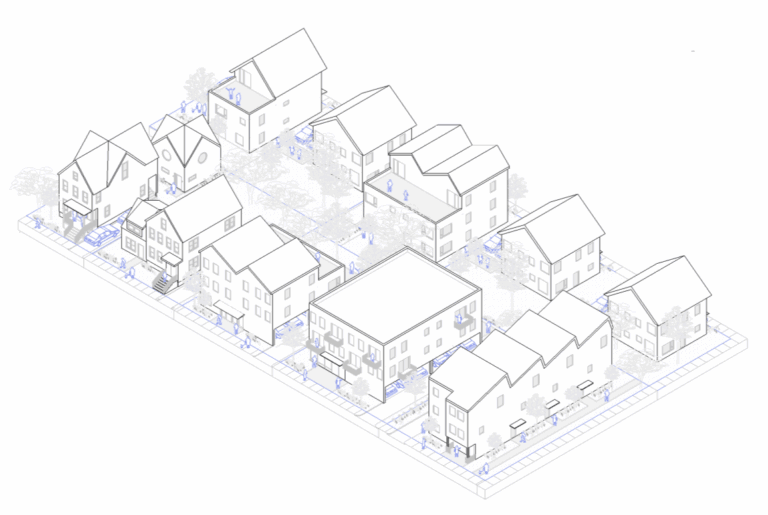
- Feasible. A 1,370 square foot single-family home on Sandusky’s typical 33 by 125 foot lot at a $280,000 sale price supports about $50,000 per acre in land value. A four-unit cottage court on a 100 by 200 foot lot hits the same price point and raises residual land value to roughly $134,000 per acre, enough to overcome legacy parcel acquisition costs on typical infill sites.
- Potentially feasible. Village-style rental townhomes and an eight-unit apartment building both come close, but only if cap rates compress from today’s 8.8 percent toward 7 percent. Both proformas are already costed aggressively at $130 per building square foot and a 10 percent developer margin.
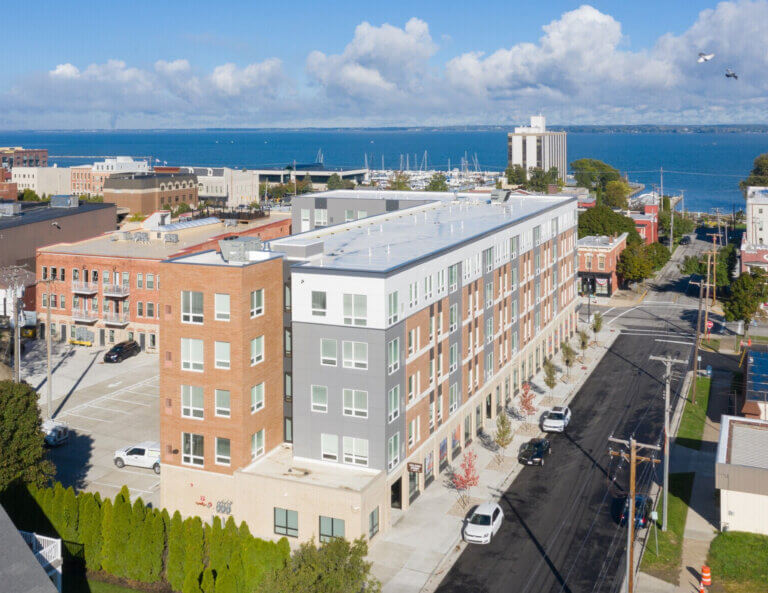
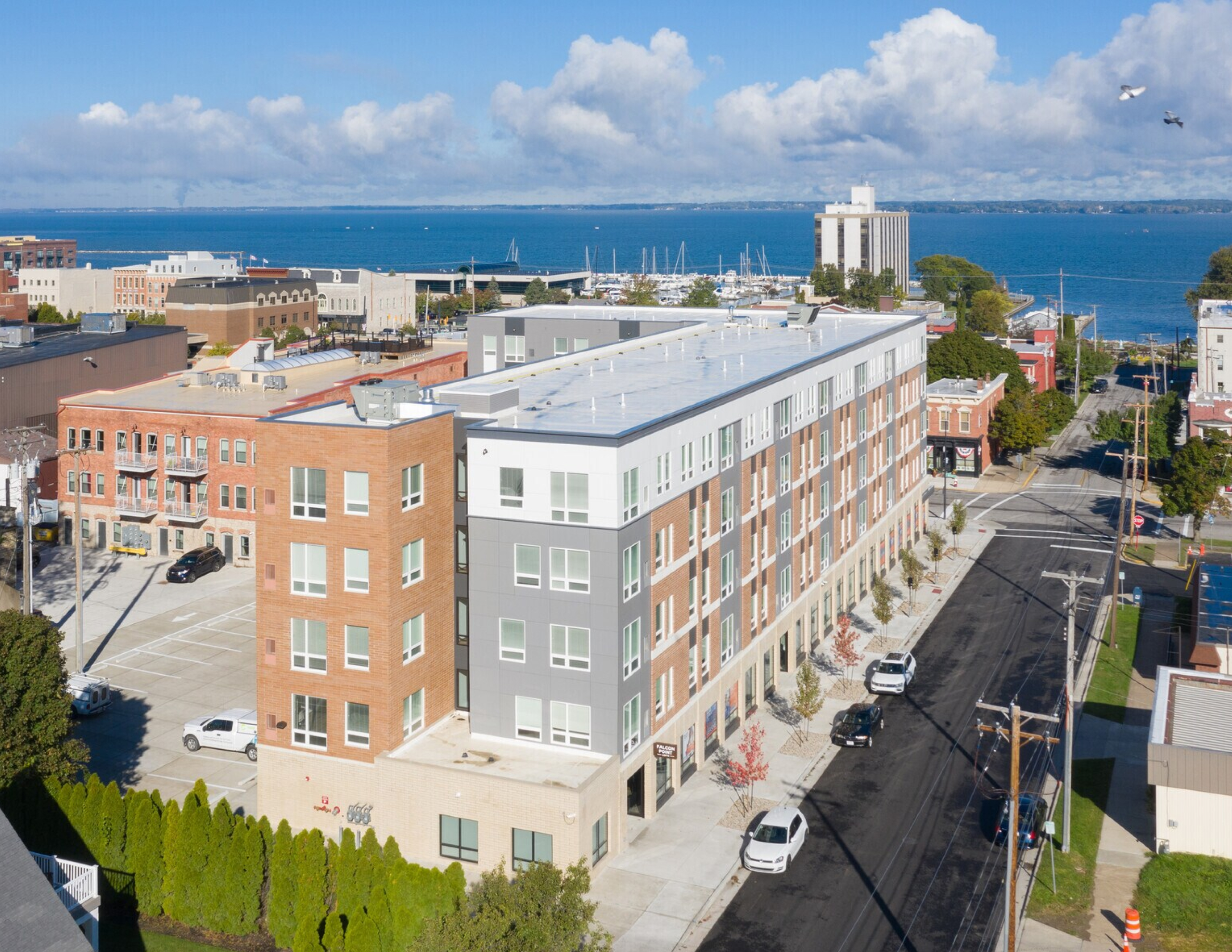
- Needs subsidy. An 80-unit midrise at rents attainable to households earning about $45,000 does not close on its own. Falcon Point Lofts, the local precedent, was built with roughly $1 million in support plus a ten-year 75 percent tax abatement.
This finding is consistent with what we find across the country at the moment, which is that rowhomes and walkups are financially feasible, but the added cost of elevators and structured parking hurt the proforma.
Site by site
The City asked us to test three specific sites plus a representative infill parcel. At Cold Creek, a partially completed single-family subdivision where recent homes have sold at the top of the market, attached condos matching the existing context are the better fit. At MacArthur Park, City-owned land beside 1940s public housing and recent amenity investment, the recommendation is attached rental products and eight-unit multiplexes at neighborhood scale, aiming for rents between $1,480 and $1,834. At the G&C Foundry site near Lake Erie and the Sandusky Bay Pathway, a mixed-use midrise is the highest and best use, and closing its financing gap would take an incentive package on the Falcon Point model.
Sandusky in context
We benchmarked Sandusky against nine Great Lakes cities of similar scale, roughly 20,000 to 40,000 residents with median household incomes between $40,000 and $60,000. Sandusky has lost 3.5 percent of its households since 2010, a milder decline than Jackson or Marion, but Painesville grew nearly 13 percent over the same period and Muskegon reversed a deeper decline entirely. Inflation-adjusted median income has been effectively flat for over a decade, moving from about $51,300 in 2010 to $50,100 in 2023, which means households have no additional purchasing power to absorb rising housing costs. Sandusky’s comparatively low cost-burden rate is real, and holding onto it depends on new supply arriving at prices its residents can actually reach.